Losing a pet is hard enough without having to work out what to do next, and it is harder still when the animal is somewhere you cannot reach. We take that part off your hands across Melbourne, whatever kind of pet it was.
There is an assumption in this trade that a small pet is a small event. A guinea pig, a budgerigar, a bearded dragon, and people are told to put it in the bin and move on. That misses the point badly. A child who has fed that animal every morning for three years does not feel it as a small event, and neither does the adult who has to deal with it before the child gets home from school.
So we treat every pet the same way, regardless of size. Your animal is collected carefully rather than efficiently, scanned for a microchip, and either prepared for cremation through a local provider or handed to you, whichever you have asked for. If you want time first, take it. If you would rather be out of the house when we arrive, that is entirely reasonable and we will let ourselves out.
The other half of this work is escaped pets, which behave exactly like any other animal in a cavity. A rabbit or a ferret that got loose takes the gap, gets stuck and dies somewhere nobody can reach: inside a stud bay, under the decking, behind the kitchen cabinetry. That becomes a location problem rather than a collection one, and it is what the detection equipment is for. Either way we treat what the animal left behind, because bedding, soil and timber hold the odour long after the pet is gone.
Tell us what has happened and we will call back with a time and a quote.
Where a pet is housed outdoors or has escaped somewhere in the property, days can pass before anyone realises. These are the signs worth acting on.
Smaller pets are often housed in a shed, garage or run at the back of the property, so a death can go unnoticed for days. A sweet, heavy smell around an enclosure is usually the first thing anyone registers.
House rabbits, ferrets and cats alike hide when they are unwell, and they choose somewhere dark and enclosed. A pet missing from its usual spots plus a developing smell is rarely a coincidence.
Blowflies clustering at a hutch, a burrow entrance, the gap under a shed or one corner of the garden point almost exactly at where an animal is lying.
Dogs and cats find these long before people do. Persistent digging, scratching or refusing to leave one part of the yard, one air brick or one section of decking is worth taking seriously.
Escaped small pets die where they hide. Rabbits, ferrets and rodents that got loose end up in wall cavities, subfloors and behind cabinetry, and the odour comes up through floorboards and skirting.
Hutches, sheds, garages and subfloor voids all heat up considerably during the day. A smell that is faint in the morning and strong by evening is decomposition accelerating in an enclosed space.
The equipment to reach wherever the animal ended up, and the decency to remember that it was somebody's pet. That is most of what this work asks for.
A rabbit, a guinea pig or a bird matters just as much to the family as a dog does. We handle all of them the same way: carefully, respectfully, and at whatever pace you need.
Every animal we collect is scanned. Where a pet has wandered from another home, that scan is what lets its family be told rather than left wondering for years.
Individual cremation with ashes returned, or communal, through local providers. If you would rather organise it yourself or bury at home, we simply prepare your pet for you.
No signage of any kind. Nobody in your Melbourne street needs to know why we are there, particularly when there are children in the house processing the loss.
Escaped pets die in wall cavities, subfloors, under decking and behind stacked storage. Those confined spaces are our normal working conditions rather than an exception.
Hutches, cages, runs and the ground beneath them are decontaminated and deodorised as part of the price, so the space is safe for any remaining animals.
Three stages, in this order, every time. You know the price before anything starts, and nothing is left untreated once your pet has been collected.
When your pet is in the house or in its hutch, this step is a short conversation rather than a search: what kind of animal, where, and what you would like to happen afterwards.
When a pet escaped and died somewhere in the structure, it becomes the whole job. We map the odour along the suspect walls and voids, confirm with detection equipment and a pilot hole check, and only open an access once we can actually see the animal. In most Melbourne homes that means one small opening, patched cleanly. If you are still working out where it is, our guide to identifying what died in your property covers the signs we follow.
Your pet is collected carefully, scanned for a microchip, and either prepared for cremation through a local provider or handed to you, whichever you have asked for. Where this is a family pet, the pace is entirely yours. Skipping that treatment is why the dead animal smell comes back after DIY removal.
Then we deal with what soaked in. Soiled bedding and nesting material are bagged and removed, the hutch, cage or cavity is treated with hospital grade antimicrobials, and enzyme deodorisers go through the space so the odour is digested rather than covered. That matters most when other animals will keep using the same enclosure.
Where a pet escaped into a wall cavity or subfloor, the gap that let it in is still open, and it will let the next one in too, along with rats and possums. Usually it is a missing air brick, a torn subfloor screen, an unsealed pipe penetration or a gap behind cabinetry. Where the gap is higher up, our homeowner's guide to a dead animal in your roof covers the roof line equivalents.
We photograph what we find and give you a short, practical list. Where the pet was housed outdoors, this step is instead about the enclosure itself: the gaps, the latch and the ground underneath, so the space is genuinely safe for the animals you still have. Those enclosures also heat up hard through the afternoon, which is why dead animal smells get worse in summer.
Nearly all of our pet work is family homes across Melbourne. These are the places we are called to:
If your pet has passed away at home, ring us and take whatever time you need before we come. If one has escaped and you can smell it somewhere you cannot reach, ring us before you start pulling things apart, because we can usually pinpoint it and open a single small access instead. It also helps to know how fast a dead animal smell spreads through a house, because the room you smell it in is rarely the room it is in.
Same-Day Response
Crews reach Melbourne homes quickly
Nobody rushes you through the visit
Cremation costs itemised separately
Unmarked vehicles, no announcement
Where animals are kept or cared for on a commercial site, a death needs handling quickly, quietly and with a record of what happened. We attend:
Schools and childcare centres in particular need this done before the children are back in the room. You get discreet attendance outside hours where that helps, and a written record of what was collected and what was treated. Where a ceiling or wall has been marked, brown ceiling stains and what they mean explains what the staining indicates.
Fast Business Response
A team handling animal recovery every week
Discreet attendance outside opening hours
Documentation for owners, parents and safety files
Standing arrangements for animal facilities
Access drives the price on a pet job far more than the size of the animal does, and cremation is itemised separately so you can see exactly what you are paying for. You get a clear figure before anything starts.
A guinea pig or budgerigar is a short, simple visit. A larger rabbit, ferret or similar takes a little more, though on pet jobs the location almost always matters more than the size.
In a hutch or inside the house is straightforward. An escaped pet that has died inside a wall cavity, deep in a subfloor or under fixed decking needs detection equipment and confined space access.
Business hours are the usual rate. Genuine after hours, weekend and public holiday attendance carries a call out loading, which we tell you about on the phone rather than on the invoice.
A pet found the same day is a contained collection. Where an animal has been missing a fortnight and decomposing in a warm cavity, the decontamination becomes the larger part of the job.
Individual cremation with ashes returned costs more than communal, and both are optional. There is no pressure either way, and the cost is itemised separately from the collection.
Treating a hutch and the ground beneath it is quick. Decontaminating a wall cavity, replacing soiled bedding and insulation, and deodorising a subfloor scales with how far the fluids travelled.
Ring us and tell us what kind of pet it is and where. We will explain what the visit involves and what the aftercare options cost. No obligation, and no charge for the conversation.
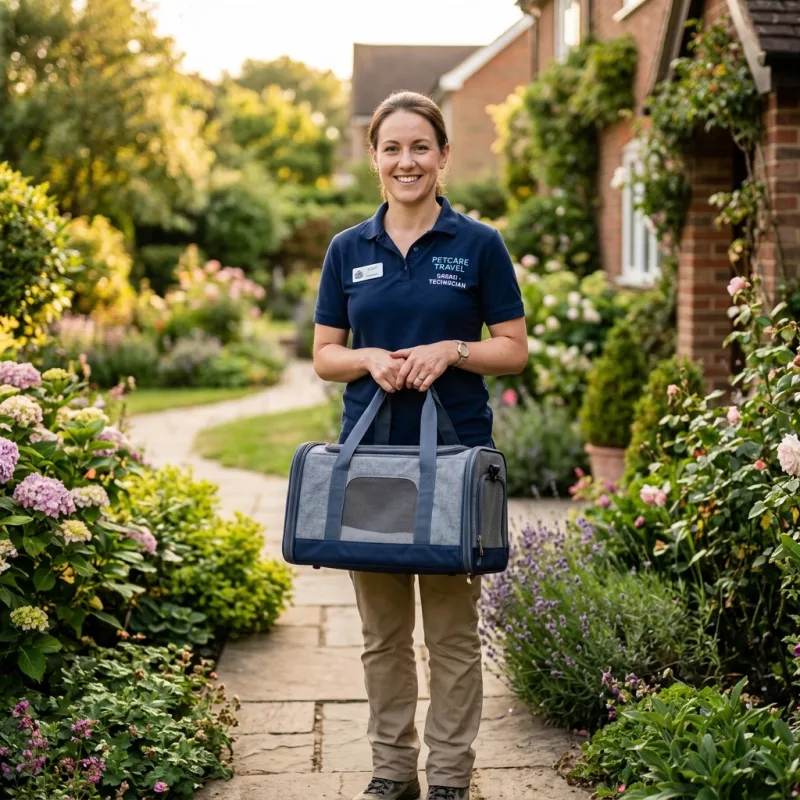
Where your pet is at home and simply needs collecting, there is nothing to inspect and we will just come when you are ready. Where one has gone missing and you can smell something in a wall, under the decking or in the shed, that is a proper search, and our crews hold same day availability across Melbourne.
A technician works the suspect walls, subfloor vents, deck edges and outbuildings, narrows the position, and puts a camera in before anything is lifted or cut. You are told exactly where the animal is, what needs opening to reach it, and what the whole visit costs before work starts. Our guide to how much dead animal removal costs in Melbourne sets out what moves that number.
If it turns out to be a rat or a possum rather than your missing pet, we will tell you that plainly. It is not what anyone wants to hear either way, but a straight answer beats a guess, and it changes what the job actually needs. Where it turns out to be animal rather than a pet, rat or possum: how to tell covers the difference.
These are the calls that go to the front of the queue. If any of them describe your Melbourne property, ring us rather than booking online.
We provide dead pet removal across Melbourne and every surrounding suburb, with crews based locally so less of the day is spent driving to you.
Need immediate Dead Pet Removal? Our emergency team is available across all suburbs.
Call Emergency LineRapid response dead pet removal across all Melbourne suburbs and surrounding areas.
Guides & Insights
Reading That Saves You A Callout
Practical explanations of what you are smelling, what it is likely to cost and what to do first in Melbourne.
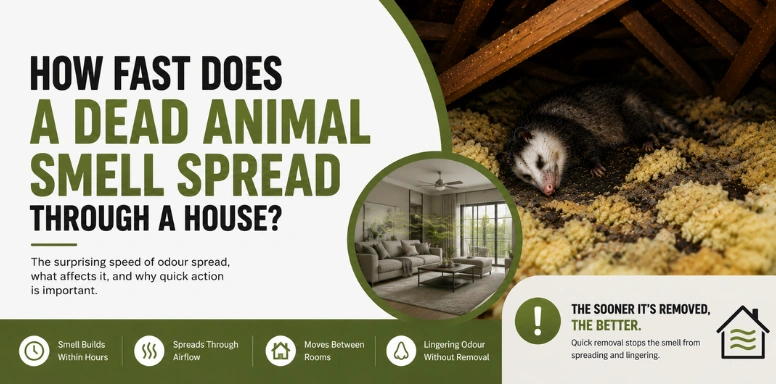
By day four it seems to be everywhere and people assume there must be more than one animal. Usually there is not. Here is how the odour actually moves.
Read the guide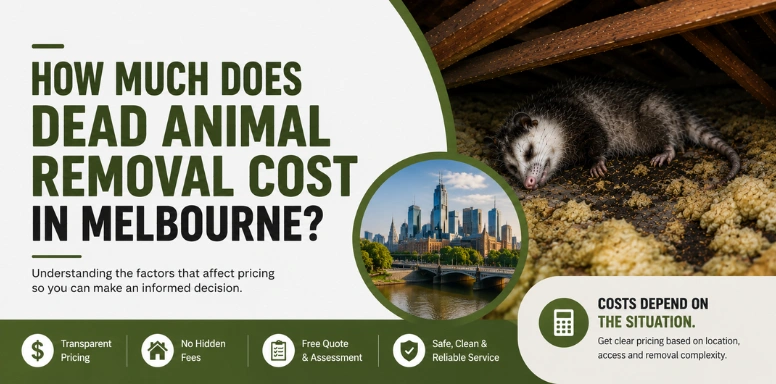
Nobody can quote this properly over the phone, and anyone who does is guessing. Here are the six factors that move the number, and how to tell a fair quote from a bait price.
Read the guide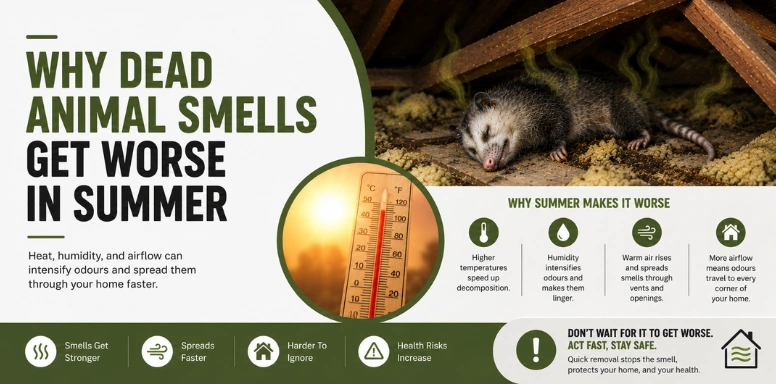
The same carcass behaves entirely differently in January than it does in July. Here is the chemistry behind it, and why summer shrinks your decision window to days.
Read the guideThe things Melbourne customers ask us before they book a dead pet removal.
No Pet Is Too Small To Deserve This Done Properly.
We will collect your pet carefully, scan for a chip, arrange cremation if you want it, and leave the hutch, cage or cavity clean and treated. Ring us whenever you are ready, at any hour.
6:00 AM - 11:30 PM, 7 Days a Week for Melbourne, VIC 3000 and every surrounding suburb.