Rat or Possum? How to Tell
When something dies in a Melbourne roof, the two candidates are almost always a rat or a possum. Telling them apart before anyone opens a ceiling is genuinely useful, because the two jobs are different in scale, in cost, and in the rules that govern them. The good news is that you can usually work it out from your own kitchen, using evidence you have already noticed without realising it was evidence.
Start With the Noise You Heard Beforehand
Almost every one of these callouts is preceded by noises, and the noise is the single most reliable clue.
Rats Sound Light and Fast
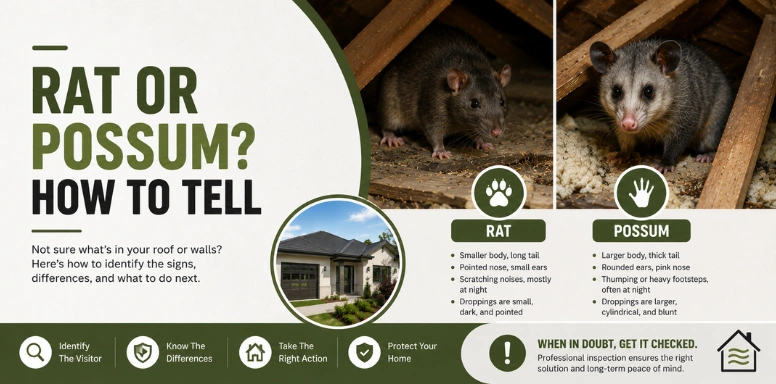
- Skittering, scratching and a rapid patter, usually along a consistent line as they run a route.
- Intermittent through the night rather than concentrated at particular hours.
- Often sounds like it is inside a wall rather than above the ceiling.
- A persistent grinding or chewing sound in the small hours, because rats gnaw constantly.
Possums Sound Heavy and Slow
- Thumping, dragging and a solid, deliberate footfall that people commonly describe as sounding like a small child walking across the ceiling.
- Distinctive guttural hissing and coughing, which brushtails produce and which is unmistakable once you have heard it.
- Activity concentrated at dusk when they leave and again before dawn when they return.
- No gnawing.
If you thought at the time that it sounded too heavy to be a rat, it almost certainly was.
The Smell Itself
Both produce an unpleasant odour, but the character and duration differ because of the difference in tissue volume.
- Rat (200 to 500 grams): sharp, sour and sulphurous. Noticeable but usually confined to one part of the house at first, and typically runs its course over three to five weeks in cool conditions.
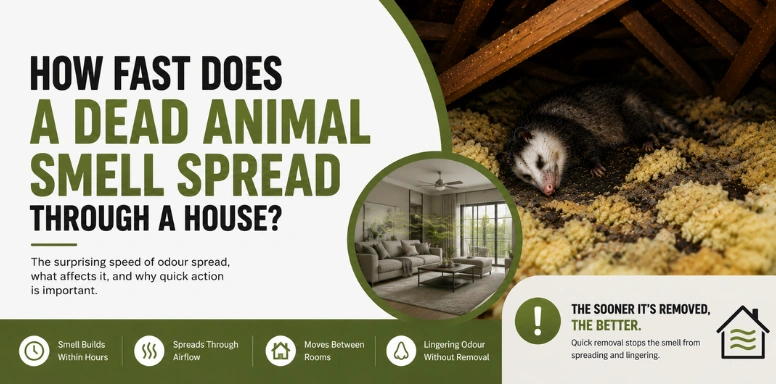
- Possum (3 to 5 kilograms): around ten times the tissue. The odour is heavier, sweeter and considerably more pervasive. Households frequently describe it as making an entire upper floor unusable within days rather than weeks.
If the smell arrived fast and hard and you cannot stay in the room, you are more likely dealing with a possum.
The Stain Is the Clearest Tell
Fluid volume scales with body mass, and that shows on the ceiling.
- Rats often produce no visible stain at all, particularly if they died in a wall cavity where fluid runs down inside the stud bay rather than pooling on plaster. Where a rat does mark a ceiling, it is usually modest, somewhere between a coaster and a saucer.
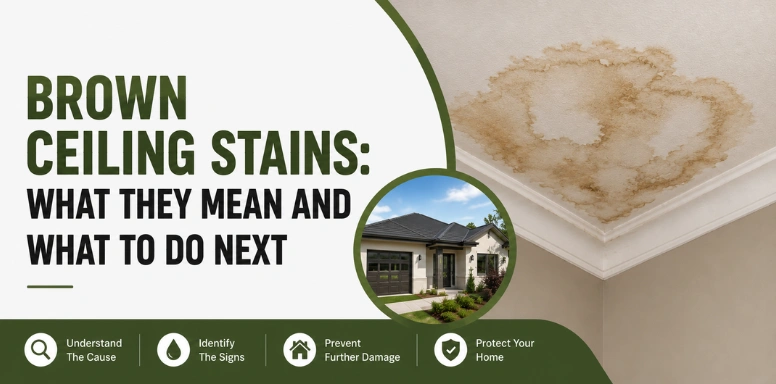
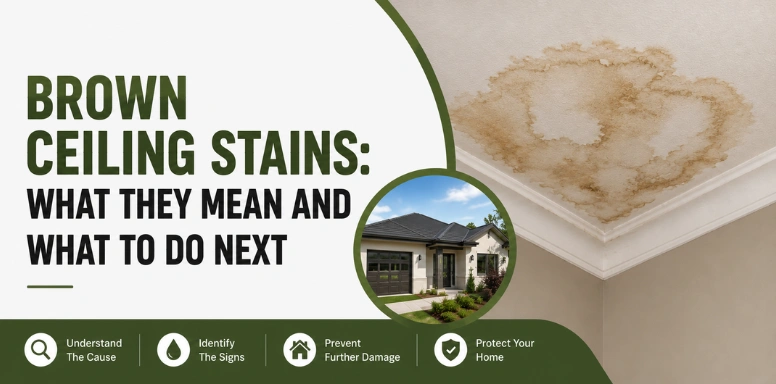
- Possums very frequently produce a large stain, dinner plate sized or bigger, yellow brown and often greasy looking, that keeps expanding for days.
A large spreading ceiling stain in a Melbourne home is a possum far more often than anything else.
Where the Smell Is Coming From
Position is a strong indicator because the two species occupy different parts of a building.
Rats Travel the Whole Structure
Rats move through wall cavities constantly, between roof spaces and food sources in kitchens and pantries. They die in stud bays, on noggins, on bottom plates at floor level, in subfloors and in duct runs. A smell that seems to come from inside a wall, or that is strongest at skirting board height, is very likely a rat.
Possums Stay in the Open Roof Space
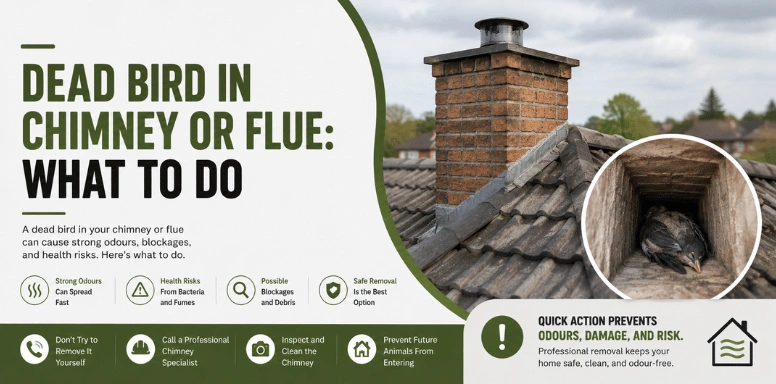
Possums are too large for wall cavities in most construction. They live in the open roof space and die there, so the odour comes from above and is strongest at ceiling level. The exception is chimneys and disused flues, where possums fall in and cannot climb out, producing a smell centred on a fireplace.
Physical Evidence in the Roof
If you can safely look into the roof space from the manhole, without walking on the ceiling, the leavings are diagnostic.
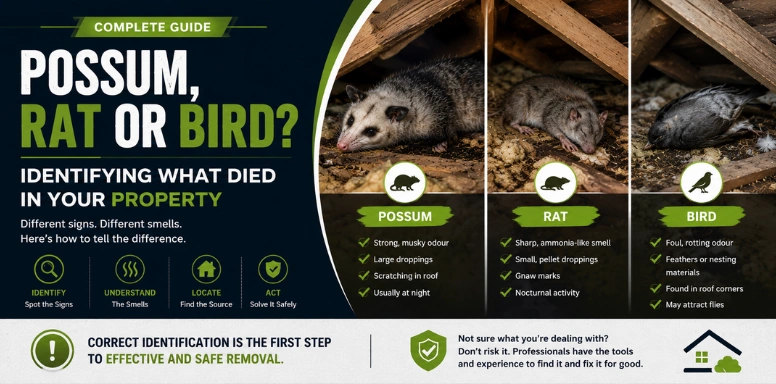
- Rat droppings are dark, roughly rice grain sized with tapered ends, and scattered in numbers along travel routes.
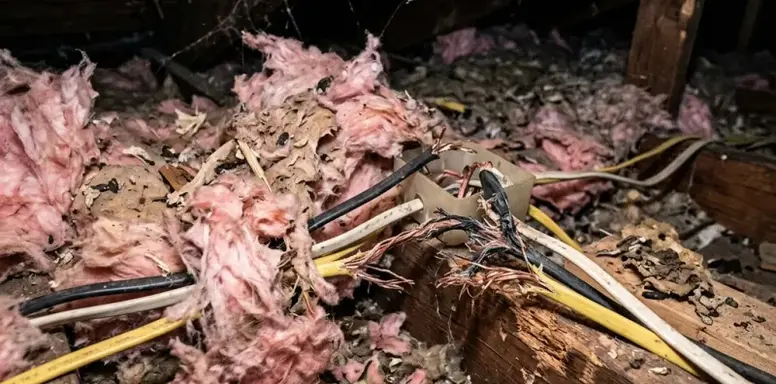
- Rat grease marks are dark polished smears on rafters and pipework where oily fur has rubbed repeatedly, alongside gnawed timber and chewed cable insulation.
- Possum droppings are much larger, roughly the size and shape of a date or a large olive, usually deposited in concentrated latrine areas rather than scattered.
- Possum nesting signs are flattened, compressed insulation where the animal has been sleeping, and no gnaw damage of the kind rats leave.
Entry Points Differ Too
- Rats need very little. A gap of about twenty millimetres is enough, so weep holes, unsealed pipe penetrations, gapped weatherboards and broken air bricks are all viable. Rat entry points are often invisible from ground level.
- Possums need a substantially larger opening, and tend to use lifted or broken roof tiles, gaps at the fascia and barge boards, and torn eave sheeting. They also need a way up, so overhanging tree branches touching the roof line are frequently part of the story. Possum entry damage is usually visible from the yard if you know where to look.
Why the Distinction Changes the Job
This is not academic. The two produce genuinely different work.
A Rat Recovery Is a Detection Problem
The animal is somewhere inside a sealed cavity, and the trick lies in pinpointing which stud bay before cutting, so one small access panel does the job rather than a series of exploratory holes. Our rat removal Melbourne service is built around exactly that: odour mapping, detection confirmation and a pilot hole check check before anything is opened.
A Possum Recovery Is a Scale and Animal Problem
The animal is usually easy enough to reach once you are in the roof, but the fluid volume means saturated insulation almost always needs cutting out and replacing, and the ceiling may need remediation. Possums are also protected native animals in Victoria, so handling and disposal are governed by the applicable wildlife requirements rather than treated as general waste. Our possum removal Melbourne work covers both sides of that.
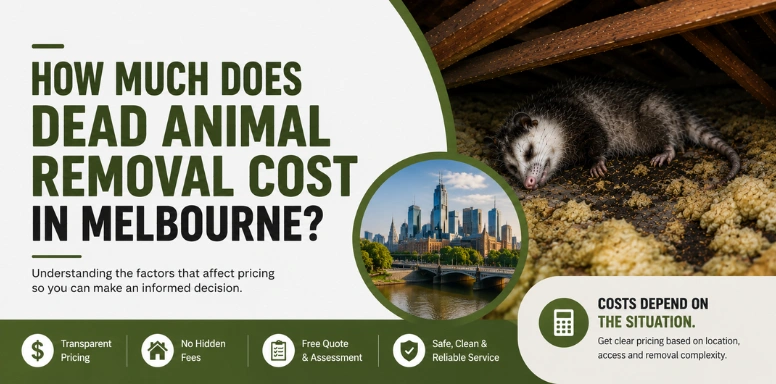
Cost differs accordingly. Possum jobs are typically the more expensive residential callout, driven largely by insulation replacement rather than the recovery itself.
If the Noises Have Not Stopped
One important distinction. If you are still hearing movement, nothing has died yet and you do not have a removal problem, you have a proofing problem.
- With possums, sealing a roof while a live animal is inside is the worst possible outcome, because you create the exact situation you were trying to avoid. Entry points are closed only once the animal has left of its own accord.
- With rats, the same logic applies for a different reason. Sealing an active run while rodents are still inside simply leaves the next carcass in the cavity.
The Short Version
- Possum: heavy thumping at dusk, a fast and overwhelming sweet smell, a large spreading ceiling stain, date sized droppings, damage visible at the roof line.
- Rat: light skittering inside walls, gnawing sounds, a sharper sour smell at skirting height, rice grain droppings, greasy smears on rafters.
If you are unsure, describe what you heard, when it stopped, where the smell is strongest and whether there is a stain. Those four details are usually enough for a technician to name the species over the phone and bring the right equipment, which saves a return visit and gets you a more accurate price from the outset.