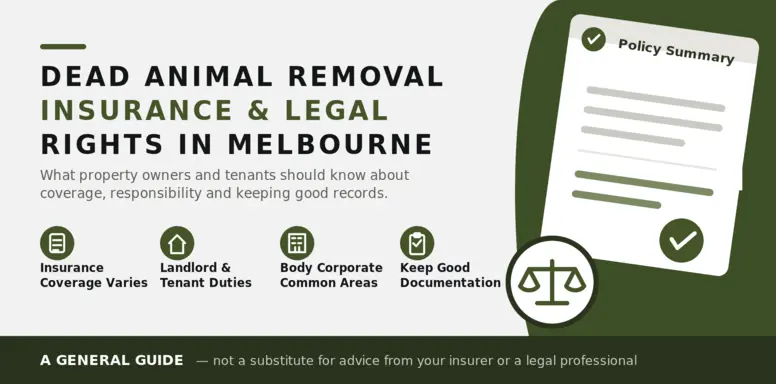
Dead Animal Removal Insurance Claims & Legal Rights in Melbourne: What Every Property Owner Must Know
Beyond the immediate unpleasantness of a dead animal problem, many Melbourne property owners and tenants also find themselves wondering about the practical, financial side of the situation. Is this covered by insurance? Whose responsibility is it if I'm renting? What are my actual rights here? These are genuinely reasonable questions, though the answers depend heavily on your specific policy, tenancy agreement, and circumstances.
At Fresho Dead Animal Removal Melbourne, we can't offer legal or financial advice, but we can share a general overview of what property owners and tenants commonly encounter, so you know what questions to ask and where to look for definitive answers specific to your situation. As always, for anything involving your specific insurance policy or legal rights, we'd recommend speaking directly with your insurer, body corporate, or a qualified legal professional.
Is Dead Animal Removal Typically Covered by Home Insurance?
Coverage varies significantly between insurers and individual policies. Some home and contents insurance policies include pest or vermin-related damage under specific circumstances, while others explicitly exclude it, treating dead animal removal as a routine maintenance matter rather than an insurable event. The only reliable way to know your specific coverage is to check your policy document directly or contact your insurer.
What Might Be Covered vs What Typically Isn't
In general terms, insurers are sometimes more likely to cover consequential damage caused by a dead animal, such as ceiling collapse from prolonged fluid saturation, than the removal service itself, which is often categorised as routine pest or maintenance work rather than sudden, accidental damage. This distinction varies by insurer and policy wording, so it's genuinely worth checking rather than assuming either way.
Questions Worth Asking Your Insurer
- Does my policy cover pest or vermin-related damage, and under what circumstances?
- Is dead animal removal itself covered, or only resulting structural damage?
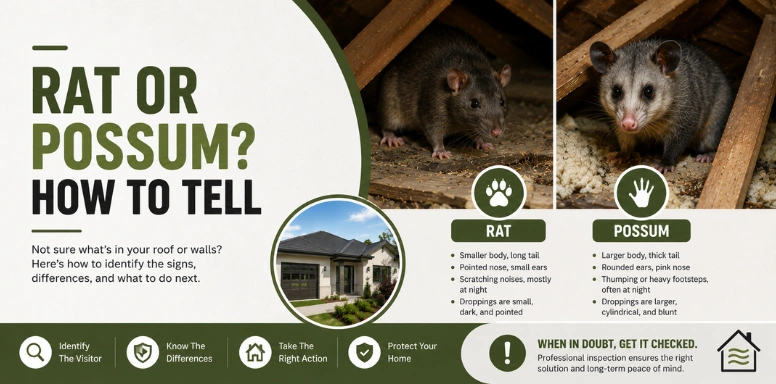
- Is there a difference in coverage between native wildlife, like possums, and pests like rats?
- What documentation would I need to provide to support a claim?
- Are there any exclusions specific to my property type or policy tier?
Documentation Worth Keeping If You're Considering a Claim
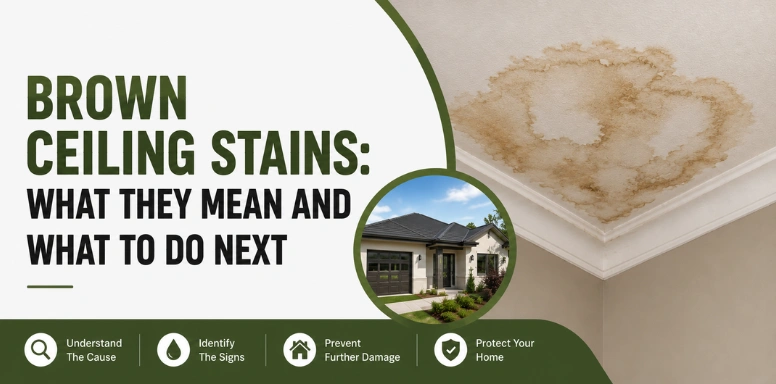
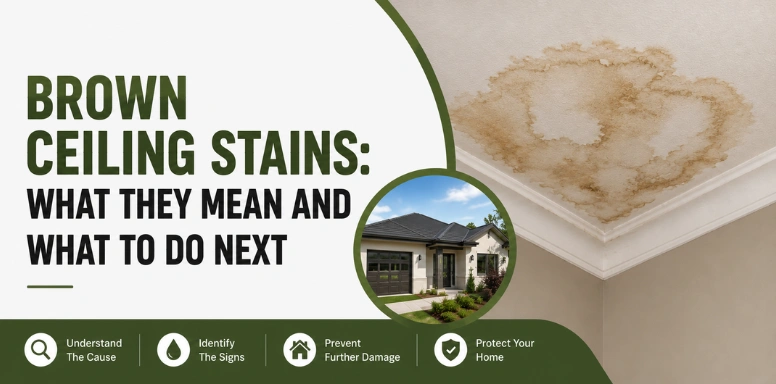
If you're planning to explore an insurance claim, keeping clear records genuinely helps your case, regardless of the eventual outcome. This includes photos of any damage, such as ceiling staining, before removal or repair work begins, an itemised invoice from your removal service, and, where relevant, before-and-after photos of any structural repairs undertaken as part of the resolution.
Rental Properties: Who Is Typically Responsible?
For rental properties in Victoria, responsibility for dead animal removal often depends on the specific circumstances and the terms of the tenancy agreement. Generally speaking, landlords are typically responsible for maintaining a property in a reasonable condition, which can extend to pest and dead animal issues, though the specifics can vary based on how and why the animal came to be present.
General Guidance for Tenants
If you're a tenant dealing with a dead animal issue, it's generally advisable to notify your landlord or property manager promptly, ideally in writing, and keep a record of this communication. Victoria's residential tenancy laws provide specific frameworks for repairs and maintenance requests, and Consumer Affairs Victoria offers general guidance on tenant rights that may be relevant to your specific situation.
General Guidance for Landlords
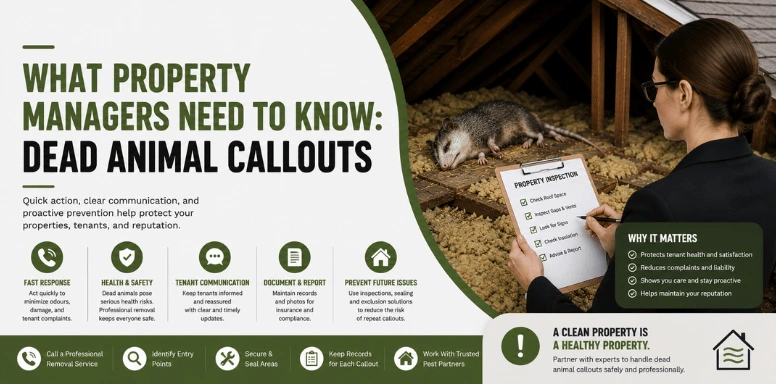
Landlords generally have an obligation to address maintenance issues, including pest-related problems, within a reasonable timeframe once notified. Prompt action not only supports tenant wellbeing but can also help limit the scope and cost of any resulting damage, such as insulation contamination or ceiling staining, which tends to worsen the longer a dead animal issue is left unaddressed. Our guide for property managers handling dead animal callouts goes into this side of things in more detail.
Body Corporate and Strata Considerations
For apartments and units under a body corporate or strata arrangement, responsibility for dead animal removal can depend on whether the affected area is classified as common property or part of an individual lot. Common property issues, such as those in a shared roof space, are often the body corporate's responsibility, while issues isolated to an individual unit's own space typically fall to the unit owner or tenant.
Commercial Property Considerations
Commercial leases often have their own specific terms regarding maintenance responsibilities, which can differ meaningfully from standard residential tenancy arrangements. Business owners and commercial landlords should review their specific lease agreement, since responsibility allocation in commercial contexts is generally more variable and negotiated on a case-by-case basis than standard residential tenancies.
How Multiple Occupancy Properties Add Complexity
Share houses and properties with multiple tenants under separate agreements can add an additional layer of complexity to determining responsibility, particularly if a dead animal issue affects a shared space rather than an individual tenant's specific area. In these situations, checking each individual tenancy agreement, alongside general Victorian tenancy law guidance, is worth doing before assuming responsibility defaults to any one party.
Timing Considerations for Insurance Claims
If you're considering an insurance claim, most policies have specific timeframes for reporting an issue after you become aware of it, so it's worth checking your policy's specific requirements rather than assuming you have unlimited time to lodge a claim after discovering damage or an issue.
Why Getting Professional Legal or Insurance Advice Matters
Given how much these situations depend on individual policy wording, tenancy agreements, and specific circumstances, general information like this can only take you so far. For anything involving a genuine dispute, a significant claim, or uncertainty about your specific rights, speaking with your insurer directly, contacting Consumer Affairs Victoria for tenancy matters, or consulting a qualified legal professional is the appropriate next step.
How Proper Documentation From Your Removal Service Helps
Regardless of how any insurance or tenancy question resolves, having clear, professional documentation of the dead animal removal and any associated treatment supports whatever process follows. Our detailed guide on stains and residue left behind by dead animal decomposition covers the kind of residue and damage that's often relevant to document if you're considering a claim or discussing responsibility with a landlord or body corporate.
Practical Steps to Take Right Now
- Check your specific insurance policy wording, or contact your insurer directly with questions.
- If renting, notify your landlord or property manager in writing and keep records of all communication.
- Photograph any visible damage before removal or repair work begins.
- Keep an itemised invoice from your dead animal removal service.
- For genuine disputes or uncertainty, contact Consumer Affairs Victoria or a qualified legal professional.
Frequently Asked Questions
1. Is dead animal removal always covered by home insurance in Victoria?
Not always, coverage varies significantly between insurers and policies, with some treating it as routine maintenance rather than an insurable event. Checking your specific policy or contacting your insurer directly is the only reliable way to know.
2. Who is responsible for dead animal removal in a rental property?
This generally depends on the specific circumstances and tenancy agreement, though landlords are typically responsible for maintaining a property in reasonable condition. Consumer Affairs Victoria offers general guidance relevant to tenant and landlord rights.
3. What documentation should I keep if I'm considering an insurance claim?
Photos of any damage before repairs begin, an itemised invoice from your removal service, and records of any related communication with your landlord or insurer are all genuinely useful to keep.
4. Who handles dead animal issues in an apartment with a body corporate?
This often depends on whether the affected area is common property or part of an individual lot, with common property issues generally falling to the body corporate.
5. Should I speak with a lawyer about a dead animal removal dispute?
For genuine disputes or significant uncertainty about your specific rights, consulting a qualified legal professional or contacting Consumer Affairs Victoria is a sensible next step beyond general information.
6. Is there a time limit for reporting a dead animal issue to my insurer?
Most policies have specific timeframes for reporting issues after you become aware of them, so it's worth checking your policy's specific requirements rather than assuming unlimited time.
Final Thoughts
Insurance coverage and legal responsibility for dead animal removal in Melbourne genuinely depend on your specific policy, tenancy agreement, and circumstances, meaning general information can only provide a starting point rather than a definitive answer. Keeping good documentation and knowing who to contact, your insurer, Consumer Affairs Victoria, or a legal professional, puts you in the best position to navigate your particular situation.
For the practical side of the problem, professional removal and documentation, contact Fresho Dead Animal Removal Melbourne today for prompt, thorough service.