Can You Have a Dead Animal in Your Home Without Knowing It?
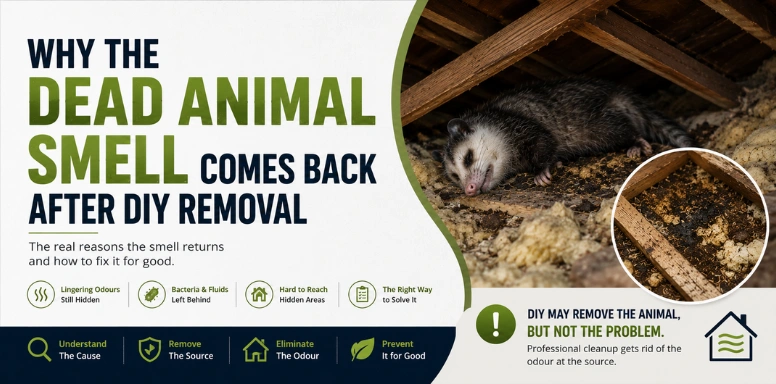
It is a genuinely unsettling thought: could there be a dead animal somewhere in your home right now, without you having noticed anything at all? While most people assume decomposition always comes with an obvious, immediate smell, the reality is a little more nuanced, and yes, it is entirely possible for a dead animal to be present in certain parts of a home for a period of time before it becomes noticeable.
At Fresho Dead Animal Removal Melbourne, we have attended plenty of jobs where homeowners were genuinely surprised to learn how long an animal had actually been there before the smell finally became obvious. In this guide, we will explain exactly how this happens, what factors delay detection, and the subtle signs worth watching for.
Why Detection Is Not Always Immediate
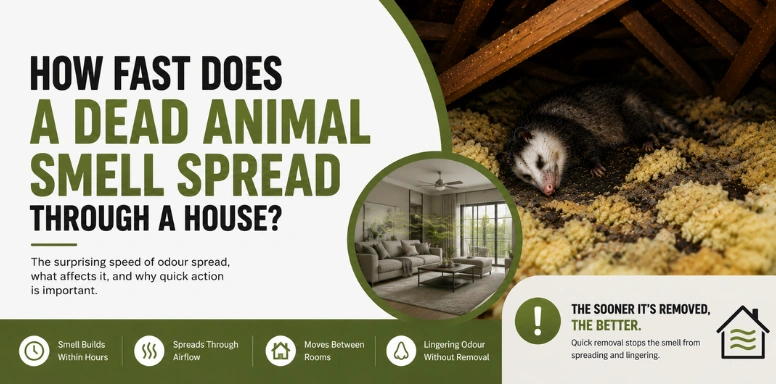
Decomposition odour needs to travel from its source to a place where you will actually notice it, and this process is not instant, particularly in larger, more enclosed spaces like roof cavities. In the very early stages of decomposition, odour intensity is also considerably lower than it becomes a few days later, meaning a very recent death might not yet be producing a smell strong enough to notice from inside living areas. Our guide on how fast a dead animal smell spreads through a house covers that travel time in more detail.
How Location Affects How Quickly You Will Notice
An animal that dies in an open, easily accessible part of a room will almost always be noticed quickly, simply through visibility alone. An animal that dies deep within a roof cavity, behind insulation, within a wall void, or beneath a house in a subfloor space, however, is far more likely to go unnoticed for longer, since these spaces are naturally more isolated from the areas of the home you regularly occupy and smell.
The Role of Ventilation and Airflow
Good ventilation, while generally desirable, can sometimes mean odour disperses more widely and thinly rather than concentrating noticeably in one specific spot, potentially delaying the point at which it becomes obviously identifiable as a dead animal smell rather than a vague, undefined mustiness. Conversely, poor airflow to a particular enclosed space can also delay odour reaching living areas, even though the animal itself is affected by full decomposition regardless.
Seasonal and Climate Factors
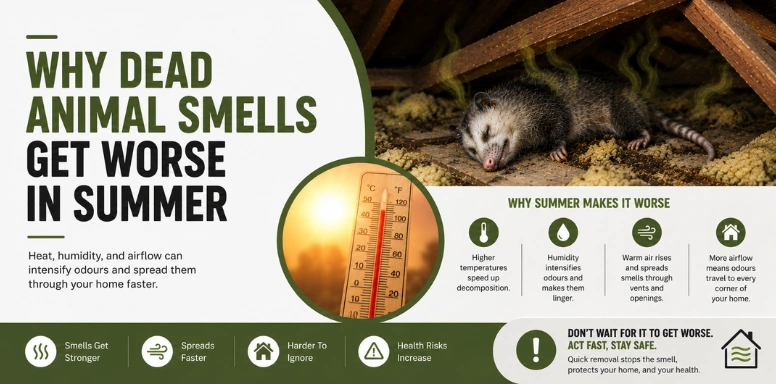
Melbourne's cooler months can genuinely slow decomposition, meaning an animal that dies during winter may take considerably longer to produce a strong, unmistakable odour compared to one that dies during a warm, humid summer stretch. This seasonal variation is part of why some Melbourne homeowners report being surprised by just how long a dead animal situation had apparently been present once finally discovered.
How Body Size Affects Detection Timing
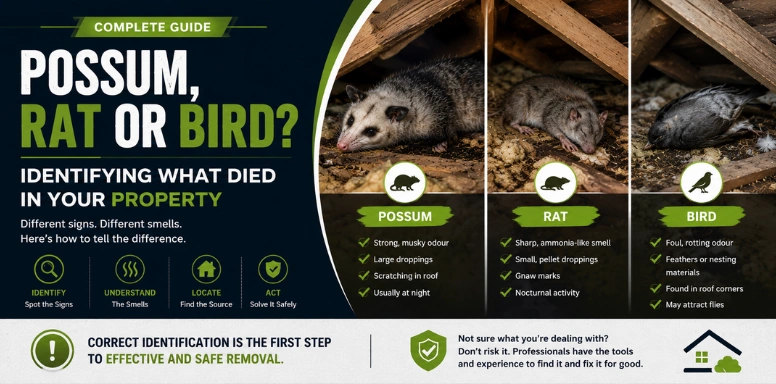
Smaller animals, like mice, naturally produce less odour and take longer relative to their size to become noticeable compared to a larger animal like a possum, simply due to the smaller volume of tissue involved in decomposition. This means a small rodent could realistically go unnoticed for a somewhat longer period than a larger animal in a similarly isolated location.
Why Renovations Sometimes Reveal Old, Unnoticed Cases
Occasionally, older, fully resolved decomposition remains, dried skeletal material with minimal ongoing odour, are discovered during renovations or repairs, having gone completely unnoticed for an extended period after the strongest odour phase had already passed. This is a genuine, if less common, scenario worth being aware of, particularly in older homes with less frequently inspected roof or subfloor spaces.
Subtle Early Signs You Might Be Missing
- A faint, slightly sweet or musty smell that has not yet developed into an obvious rotten odour.
- A very mild, barely noticeable increase in fly activity near a specific area.
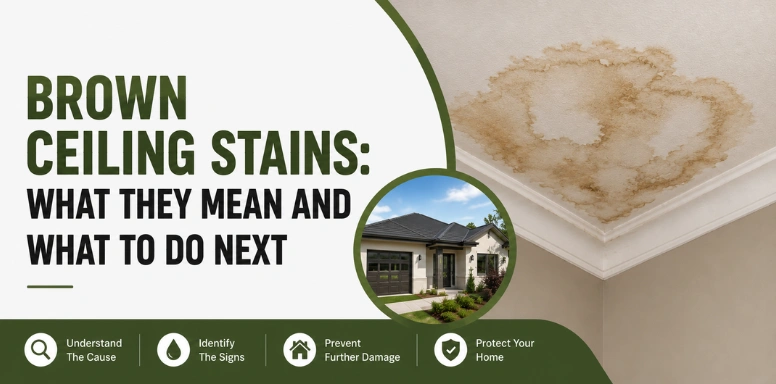
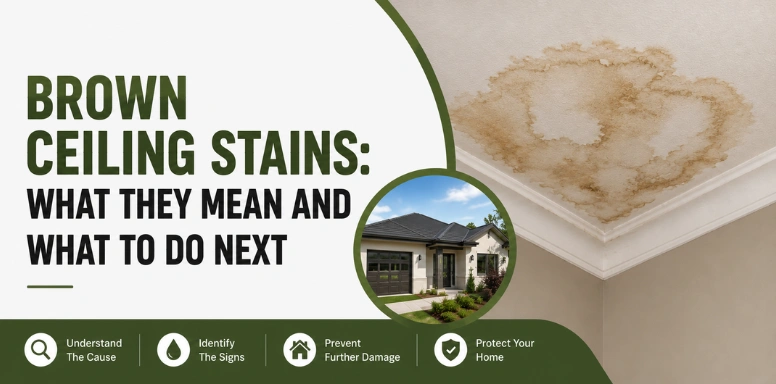
- The very earliest, faint stages of ceiling or wall discolouration, not yet an obvious stain.
- A smell that is only noticeable in one specific room, and only under certain conditions like warm weather.
- A vague sense that something is not quite right, without being able to pinpoint exactly what.
If any of those sound familiar, our article on identifying a dead animal by smell and signs goes through how to tell decomposition apart from the other things that can make a house smell off.
Why Pets Sometimes Notice Before Humans Do
Dogs and cats have a vastly more sensitive sense of smell than humans, and it is not uncommon for pets to show unusual interest in a specific wall, corner, or area of flooring well before any human household member notices anything unusual themselves. If your pet has developed an inexplicable fixation on a particular spot, particularly scratching, sniffing intently, or refusing to settle nearby, it is worth considering this as a potential early indicator worth investigating.
How Long Can This Realistically Go Unnoticed?
In cases involving very isolated locations, such as a distant corner of a large roof cavity or within a wall void in a rarely used part of the home, it is genuinely possible for a week or more to pass before odour becomes strong enough to be clearly identifiable as a dead animal smell, particularly during cooler weather. In more typical situations, most homeowners notice something within a few days, even if they cannot immediately identify the exact cause.
Why Undetected Decomposition Still Causes Problems
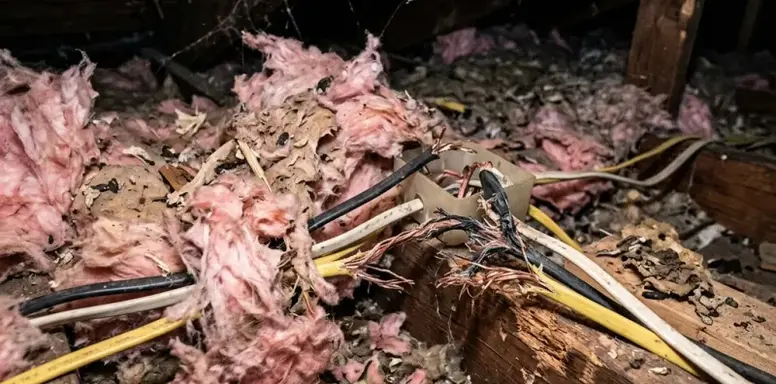
Even before odour becomes obvious, decomposition fluids can already be soaking into surrounding insulation, timber, or plasterboard, meaning the underlying damage and contamination process continues regardless of whether you have consciously noticed a smell yet. Our detailed guide on stains and residue left behind by dead animal decomposition explains exactly what this residue looks like and why it requires proper treatment once discovered, even in cases where the odour itself was not noticed early on.
Could an Inspection Confirm There Is Nothing There?
If you are genuinely concerned but have not noticed clear signs, a professional inspection can offer peace of mind, using scent-tracking experience and, where appropriate, thermal or fibre-optic equipment to check accessible areas like roof cavities for any early, undetected issues. This is particularly worth considering after recent possum or rodent activity, even if no obvious odour has developed yet.
What to Do If You Suspect Something Without Being Certain
Trust subtle instincts here. A faint, unexplained smell that seems slightly off, even if you cannot quite place it, is worth taking seriously rather than dismissing. Checking accessible areas yourself, such as looking for early ceiling discolouration or checking near known possum or rodent entry points, can sometimes provide enough information to decide whether a professional inspection is warranted.
Why Early Detection Genuinely Matters
Catching a dead animal situation in its earliest stages, before strong odour and significant fluid contamination develop, generally means a simpler, faster, and less costly resolution. This is one of the more compelling reasons to take even subtle, uncertain signs seriously rather than waiting for undeniable confirmation before seeking a professional assessment.
Frequently Asked Questions
1. Can a dead animal really go completely unnoticed at first?
Yes, particularly in isolated locations like a distant part of a roof cavity, and especially in cooler weather, which slows decomposition and the resulting odour intensity in its earliest stages.
2. Why might my pet notice something before I do?
Dogs and cats have a far more sensitive sense of smell than humans, and unusual pet behaviour, like fixating on a specific spot, can sometimes indicate an issue before it is noticeable to people.
3. Does Melbourne's climate affect how quickly I would notice a dead animal?
Yes, Melbourne's cooler months can slow decomposition, meaning noticeable odour may take longer to develop compared to warmer, more humid conditions.
4. Should I get an inspection even without an obvious smell?
If you have subtle concerns, recent possum or rodent activity, or unusual pet behaviour, a professional inspection can offer peace of mind even before an obvious odour develops.
5. Does undetected decomposition still cause damage before I notice the smell?
Yes, decomposition fluids can already be soaking into surrounding materials before odour becomes obvious, meaning the underlying contamination process continues regardless of detection timing.
6. Can an old, unnoticed dead animal be found during a renovation?
Yes, this does occasionally happen, particularly in older homes, where dried remains from a long-past decomposition event are discovered well after the strongest odour phase has already passed unnoticed.
Final Thoughts
It is entirely possible for a dead animal to be present in certain parts of a home for some time before becoming obviously noticeable, particularly in isolated spaces like roof cavities or during cooler weather. Paying attention to subtle early signs, and trusting your instincts, or your pet's, when something seems slightly off, can help you catch and resolve these situations before they escalate.
If you have any concerns about a possible dead animal in your Melbourne home, even without a strong, obvious smell yet, contact Fresho Dead Animal Removal Melbourne today for a professional assessment and peace of mind.